Learning the 4 Chinese tones through games
Tones worry adults far more than children. To a child, a voice that rises, falls or stays high is a little tune, and tunes are learnt by playing. Here are ten simple games, grouped by type, with materials, suggested ages and the mistakes to avoid.
Before you play: three anchors
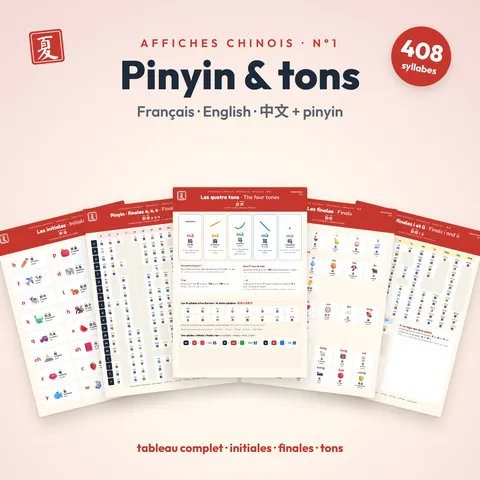
Mandarin has four tones and a neutral tone. If the topic is new to you, start with the guide to pinyin and tones in colour, which describes each tone and the basic gestures. This page is about practice.
- One colour per tone: red for the 1st, orange for the 2nd, green for the 3rd, blue for the 4th, grey for the neutral tone. Keep the same code everywhere, on cards and on the board.
- One familiar word per tone: pick four words the child likes, for example māo 猫 cat, é 鹅 goose, gǒu 狗 dog, tù 兔 rabbit. These become the “anchor words”.
- Five minutes is enough: a short game every day sticks better than a long weekly session. Stop before the child gets bored.
For pronunciation, keep a native recording to hand (an online dictionary with audio, a video, an audiobook). The adult does not need to be a model: you play, you make mistakes, you listen again together.
Movement games (from age 3)
1. Tone arms
Standing up, the child draws each tone with an arm while saying the syllable: arm held level for the 1st tone, rising diagonally for the 2nd, dipping then rising for the 3rd, dropping sharply for the 4th. Start with mā má mǎ mà, then use the anchor words. Seated version: trace the tone with a finger on the table.
2. The conductor
The adult (then the child) becomes the conductor and makes a tone gesture without speaking; the group sings the syllable a with the right melody. Then swap: the conductor sings, the others show the gesture. In class, it takes two minutes at the start of a lesson.
3. The tone car
Draw four roads on a large sheet: a flat road, an uphill road, a valley (down then up) and a steep downhill. A toy car drives along while the child makes the sound: a high, flat “vroom”, then a rising one, and so on. Once the drawing is familiar, the adult says a word (shū 书 book, shù 树 tree) and the child puts the car on the right road.
Card and colour games (from age 4)
4. Colour sorting
Set out four boxes or four sheets of coloured paper: red, orange, green, blue. Draw a picture card, say the word, and the child puts it in the box of the first syllable’s tone, then checks with the pinyin colour on the back. Start with one-syllable words, then two-syllable words looking only at the first syllable.
5. Tone bingo
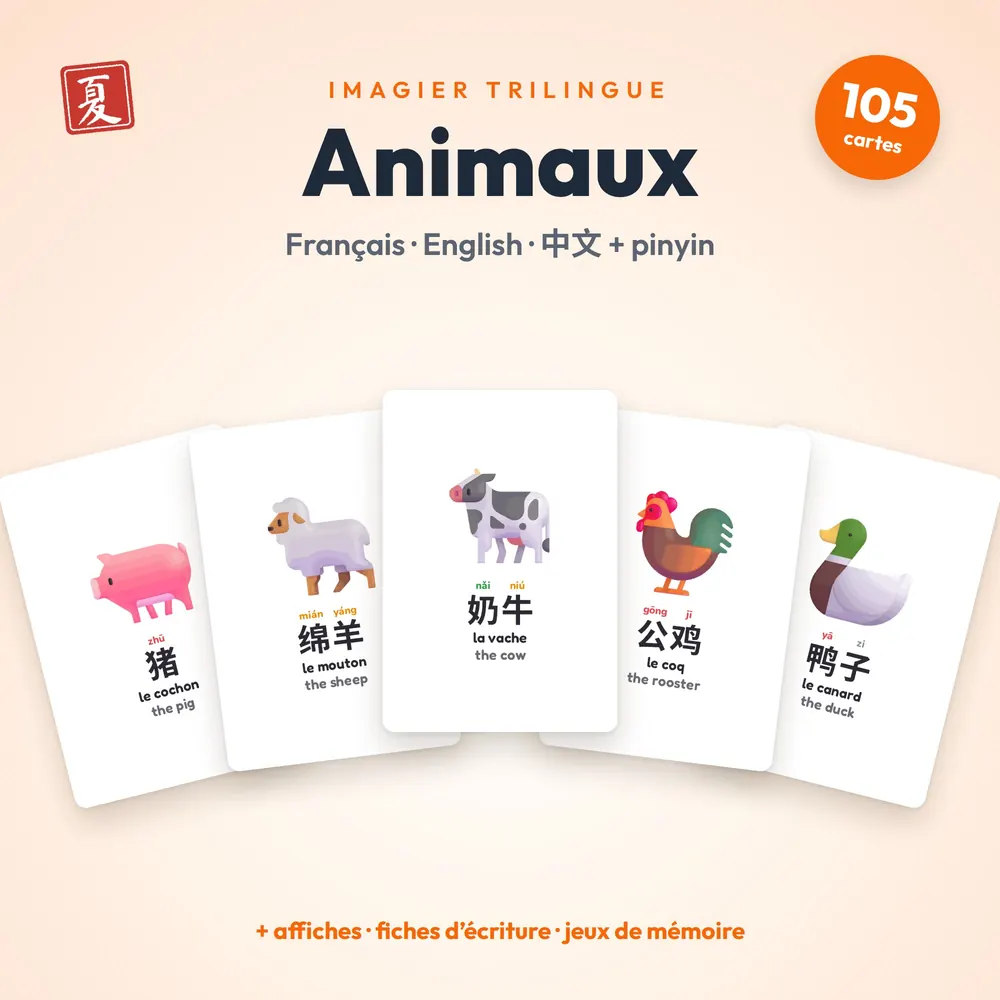
Each player gets a nine-square grid of pictures. The adult calls a tone (“second tone!”) or shows a colour; the player finds a word with that tone and covers it with a counter. Animal words work well: yú 鱼 fish, yáng 羊 sheep, mǎ 马 horse, xiàng 象 elephant, niǎo 鸟 bird, zhū 猪 pig.
6. Colour treasure hunt
Hide about ten cards around the room. Each time the child finds one, they say the word and raise their arm in the right tone shape before bringing it back. For older children, add a rule: “only bring back 3rd-tone words”.
Listening games with pairs (from age 5)
A “minimal pair” is two words that differ only in tone. It is the best ear training there is, and it shows children why tones matter.
| 1st or 2nd tone | 3rd or 4th tone |
|---|---|
| mā 妈 mum | mǎ 马 horse |
| tāng 汤 soup | táng 糖 sugar, sweets |
| shū 书 book | shù 树 tree |
| shí 十 ten | sì 四 four |
| mǎi 买 to buy | mài 卖 to sell |
7. Same or different?
The adult says two words (tāng then táng, or tāng then tāng). The child gives a thumbs up if they are the same and waves a hand if they are different. Then they point to the picture for the last word: soup or sweets?
8. Tone telephone
With four or more players, the first player hears a word from the list and whispers it to the next, keeping the tone. The last player says it aloud and shows the card. If the tone changed along the way, find out together where it happened.
9. The 买 and 卖 market
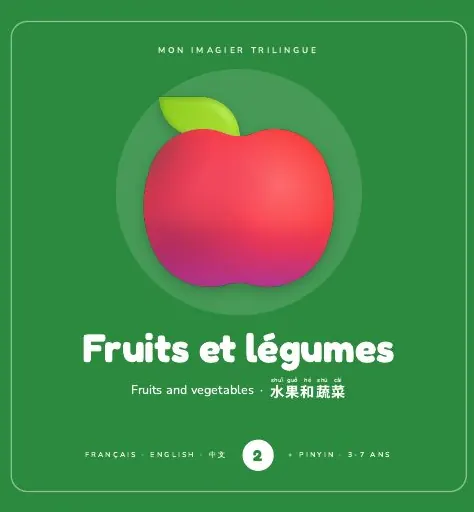
One child is the stallholder, the other the customer. The customer says wǒ mǎi 我买 “I buy” while pointing at a fruit; the stallholder answers wǒ mài 我卖 “I sell”. Playing both roles, the child hears and produces the 3rd and 4th tones in a real situation. The fruit cards from the fruit and vegetables book make a ready-made stall.
Singing the tones (all ages)
10. The tone song
Sing mā má mǎ mà ma to a familiar tune, exaggerating the melody, then swap in other syllables: yī yí yǐ yì, bā bá bǎ bà. Chinese nursery rhymes are good practice too: listen before singing, and make the tone gesture on words that repeat.
Numbers are easy to chant: yī 一, èr 二, sān 三, sì 四, wǔ 五, liù 六, qī 七, bā 八, jiǔ 九, shí 十. Counting to ten covers almost every tone. The guide counting in Chinese on your fingers adds the hand signs.
Planning the week
A typical week, five minutes a day:
- Monday: tone arms with the four anchor words.
- Tuesday: colour sorting with ten cards.
- Wednesday: same or different, with two pairs.
- Thursday: the tone car or the conductor.
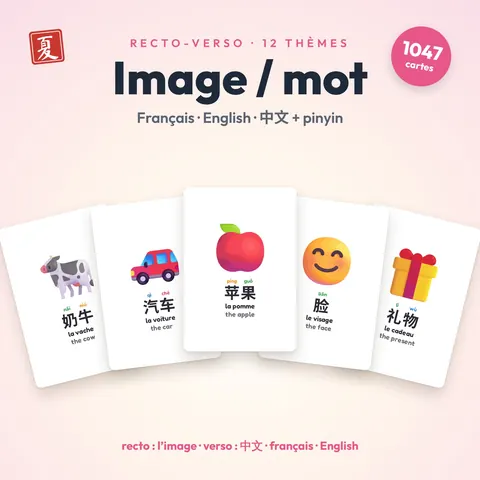
- Friday: bingo or a memory game, saying every word aloud.
By age: at 3 to 4, stick to gestures, songs and sorting with a few cards. At 5 to 7, add pairs and bingo. At 7 to 10, children can read the tone marks, use the pinyin chart and play with two-syllable words.
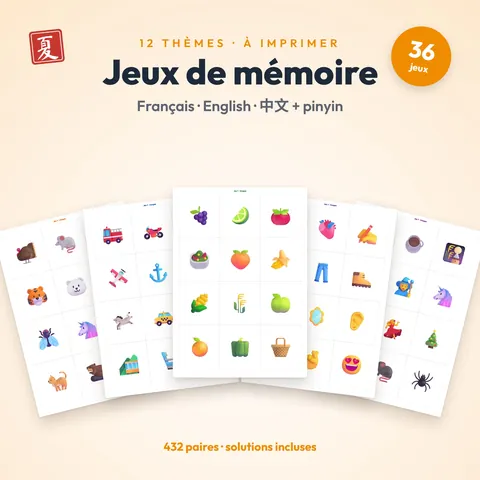
In the memory game, every card turned over must be said aloud: the pair only counts if the tone is right.
Common mistakes
- Correcting all the time: repeat the word correctly without dwelling on it, and move on. The game has to stay a game.
- Making the 3rd tone too long: inside a sentence it mostly stays low and barely rises. The full dip is heard on a single word or at the end of a sentence.
- Saying everything on one note: English-speaking children often flatten tones. Exaggerating at first helps; soften it later.
- Changing colours: a code that differs from one material to the next blurs the cues. Keep red, orange, green, blue and grey throughout.
- Moving to two syllables too soon: two tones in a row are harder. Stay with single syllables until the listening games go well.
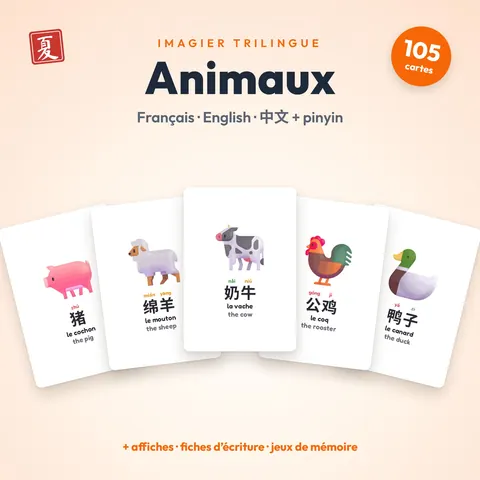
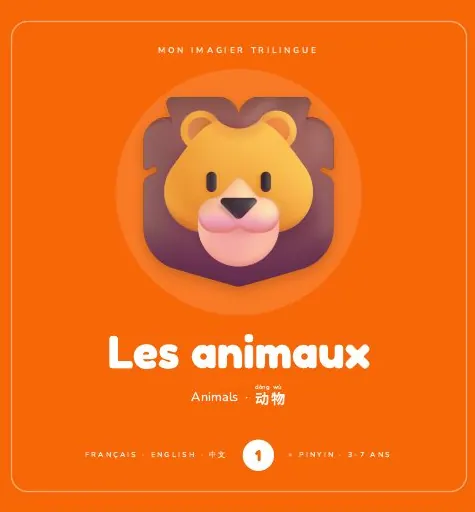
To carry on with a book, the animal picture book uses the words from these games, with pinyin coloured by tone:
Frequently asked questions
At what age can children learn Chinese tones?
From age 3 through listening, singing and gestures. Minimal pairs and reading tone marks usually come at around 5 to 7.
How long should we play each day?
Five minutes a day is enough. Regularity matters more than length.
I don’t speak Chinese. Can I still play these games?
Yes. Listen to each word on a native recording before the game, and use cards with colour-coded pinyin so you know which tone to say.
Which word pair should we start with?
妈 mā and 马 mǎ, then 汤 tāng and 糖 táng. They are concrete words you can show in a picture.
Why use colours for tones?
Colour is spotted at a glance, even before reading the tone mark. It lets children sort, search and play before they can read.